2011年8月15日星期一
2011年8月14日星期日
2011年8月7日星期日
Augmented Reality
I found this video insipring as it is very similar to what we are doing in tutorials. With the aid of a piece of paper and buildAR, it allows us to generate a variety of different scenes.
2011年7月31日星期日
3 developed creatures
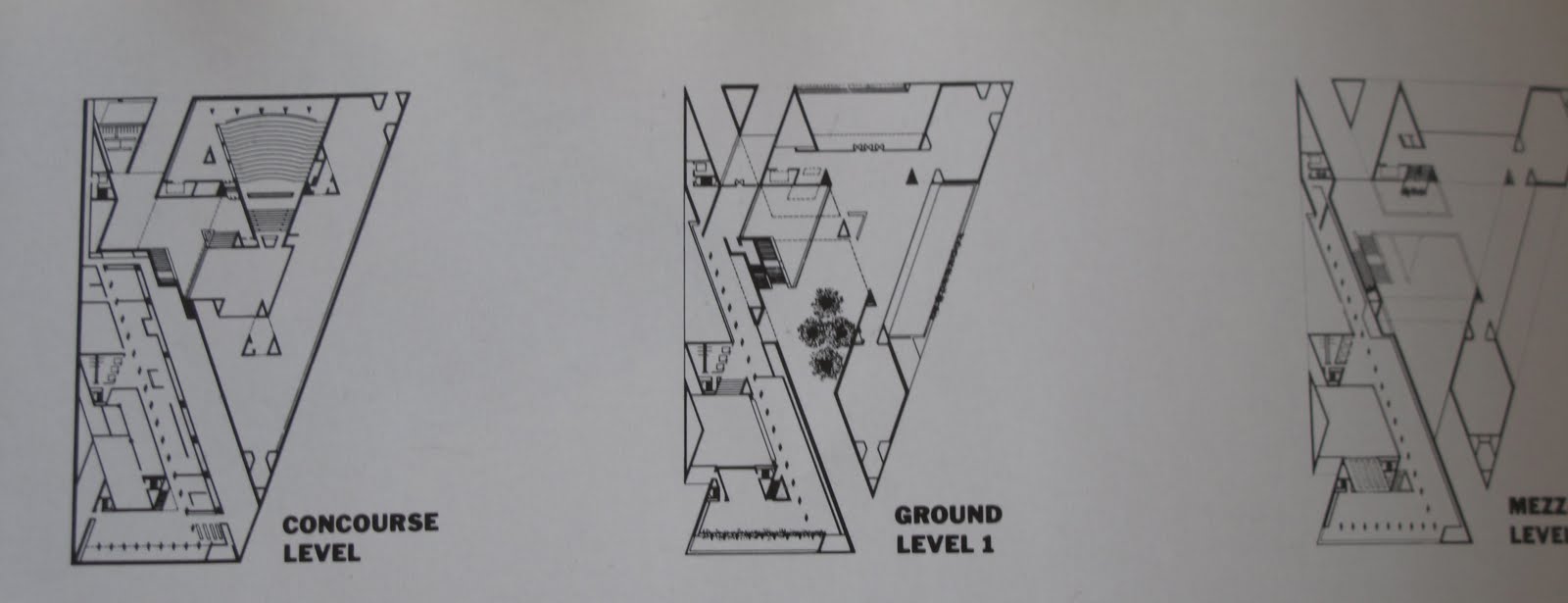
Gary: Inspired by the national gallery of art from I.M. Pei. According to my description to this building, the most important concept involved in designing the project comes down to geometric complexity. So for this creature, I tried a few polygons. The appearance of this creature is also similar to the front facade of the gallery.
Pyra: Inspired by the Louvre Pyramid designed by I.M. Pei, because the building is largely constructed by triangular glass segments, therefore this creature has a solid structure in terms of its triangular shape.
Fiti: Inspired by the Fragrant Hill hotel from I.M. Pei, two ideas on my mind when I created this were: the balancing of symmetry and the relationship between the creature and nature. For the balancing of symmetry, I made the body to be shape of the word S. The reason that I added elements of plants to this creature is everything has a close relationship with nature in Chinese culture, which was considered by I.M. Pei when he designed the hotel, it is surrounded by lake, flowers and trees.
2011年7月26日星期二
Week 2 independent studies: 3 more examples of selected architect's work
1. National gallery of art:
Details:
Location: National Mall in Washington,D.C.
Establishment: 1937
Building area: 1500 square metres
Visitor figures: 4.6 million (till 2009)
Scale: 7 stories
Description: The East Building remained Pei's most famous work. It will surely endure as one of his best. Here was the refinement he had felt unable to achieve in the detailing of the National Centre for Atmospheric Research, the massing of the Dallas City Hall, and the spaces of the Kennedy Library. It combined the best of his planning experience gained under Zeckendorf with the full fruits of the later years of experimentation in geometric complexity and the exploitation of materials. More than any of his previous buildings, it was also informed by an inescapably Chinese sensitivity to light and space and subtle control of how the user experiences a work of architecture. The building was at once monumental and animated, a mature expression of all the Pei had been moving toward as an architect.
References: I. M. Pei Wiseman, PQ 724.9, p. 155-156 (accessed 26 July, 2011)
http://en.wikipedia.org/wiki/National_Gallery_of_Art (accessed 26 July, 2011)
2. The Fragrant Hill Hotel
Details:
Location:In the former Imperial Hunting Grounds, 32km from downtown Beijing, China
Gross floor area: 36900 square metres
Construction: April, 1980
Completion: October, 1982
References: I. M. Pei Wiseman, PQ 724.9, p. 185-203 (accessed 26 July, 2011)
http://www.pcf-p.com/a/p/7905/s.html (accessed 26 July, 2011)
3. Louvre Pyramid
Details:
Location: The Louvre Palace, Paris
Completion: 1989
Height: 20.6 metres
Details:
Location: National Mall in Washington,D.C.
Establishment: 1937
Building area: 1500 square metres
Visitor figures: 4.6 million (till 2009)
Scale: 7 stories
Description: The East Building remained Pei's most famous work. It will surely endure as one of his best. Here was the refinement he had felt unable to achieve in the detailing of the National Centre for Atmospheric Research, the massing of the Dallas City Hall, and the spaces of the Kennedy Library. It combined the best of his planning experience gained under Zeckendorf with the full fruits of the later years of experimentation in geometric complexity and the exploitation of materials. More than any of his previous buildings, it was also informed by an inescapably Chinese sensitivity to light and space and subtle control of how the user experiences a work of architecture. The building was at once monumental and animated, a mature expression of all the Pei had been moving toward as an architect.
References: I. M. Pei Wiseman, PQ 724.9, p. 155-156 (accessed 26 July, 2011)
http://en.wikipedia.org/wiki/National_Gallery_of_Art (accessed 26 July, 2011)
2. The Fragrant Hill Hotel
Details:
Location:In the former Imperial Hunting Grounds, 32km from downtown Beijing, China
Gross floor area: 36900 square metres
Construction: April, 1980
Completion: October, 1982
Description: This hotel stands in a public park within the former Imperial Hunting Grounds outside Beijing, not far from the Summer Palace and other key historic sites. Balancing symmetry and asymmetry, the 325 guest rooms zigzag out from a central skylit space to preserve the site's ancient trees. Each guest room opens onto a courtyard through a shaped "window picture" that frames the landscape and brings the outdoors inside. Building and gardens merge inseparably in an intimate reciprocal relationship.
Underlying the design is a strategy to provide a "Third Way" wherein advanced Western technology is grafted onto the essence of Chinese vernacular architecture without literal imitation. The skylight was the only major imported component; everything else was constructed by local craftsmen using age-old techniques and materials. Fragrant Hill thus draws from the living roots of tradition to sow the seed of a new, distinctly Chinese form of modern architecture that can be adapted, not merely adopted, for diverse building types. References: I. M. Pei Wiseman, PQ 724.9, p. 185-203 (accessed 26 July, 2011)
http://www.pcf-p.com/a/p/7905/s.html (accessed 26 July, 2011)
3. Louvre Pyramid
Details:
Location: The Louvre Palace, Paris
Completion: 1989
Height: 20.6 metres
订阅:
博文 (Atom)